In a recently published study in Nature Neuroscience, researchers from the University of California, Los Angeles described how groups of mice collectively adapt their behavior to survive low ambient temperatures. When four co-housed male mice were placed in a chamber at 5°C, the animals spontaneously organized themselves into tight groups — “huddles” — that significantly reduced heat loss. Using thermal imaging and implanted core-temperature recorders, the authors showed that huddlingincreases the number of thermal contact points between animals, raises body-surface temperature, and stabilizes core temperature — unlike mice kept alone, whose core temperature dropped by almost a full degree Celsius within 30 minutes. What is particularly interesting is that the process by which these groups form and break apart is not random. Each animal makes both active decisions (self-initiated, meaning it approaches others and initiates contact) and passive decisions (one individual stays in place while others join) to enter or leave a huddle. These decisions are not random — the larger the group, the more often active decisions dominate, because this requires coordination among a greater number of individuals. The animals also showed individual stability in their roles: those that more often initiated entry also more often initiated exit, regardless of whether they were tested in pairs or in groups of four.
The dorsomedial prefrontal cortex (dmPFC) plays a key role here — a brain region long associated with social decision-making. Using in vivo calcium microscopy, the authors recorded the activity of more than 5,000 neurons in freely moving mice. It turned out that active and passive decisions are encoded by separate neuronal populations within the dmPFC — these populations barely overlap and differ from neurons encoding general social interactions or rest. When the researchers chemogenetically silenced the dmPFC in two of the four mice in a group, the manipulated animals significantly reduced the number of active decisions and became more passive. Surprisingly, however, their unmodified partners immediately compensated for this deficit, increasing their own decision-making activity by a comparable amount. As a result, the total time the group spent in a huddle remained unchanged — the thermal homeostasis of the entire community was preserved.
These findings reveal an elegant cortical mechanism that allows social groups to collectively adapt to environmental stress. Rather than relying solely on individual responses, animals monitor their partners’ behavior and adapt their own decisions to maintain the stability of the entire group. Although the study concerned mice, it provides inspiring analogies to human mechanisms for coping with stress — from social support in difficult weather conditions to broader processes of group emotion regulation and homeostasis. It also shows how the delicate balance between individual and collective strategies can determine survival in a changing environment.
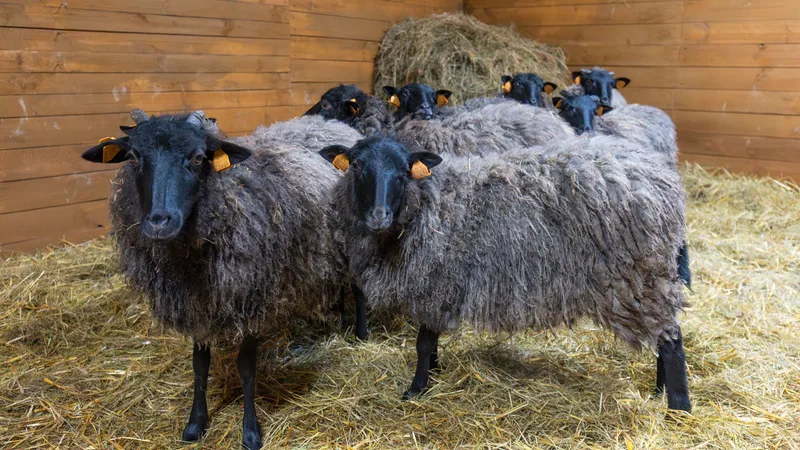
Does this not somewhat resemble sheep, or us humans? We leave the question open; however, we know that sometimes it is worth being closer to another individual not only in order to reduce thermal discomfort.