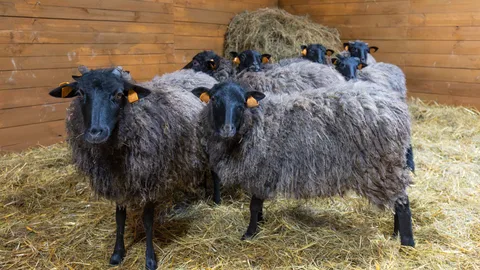
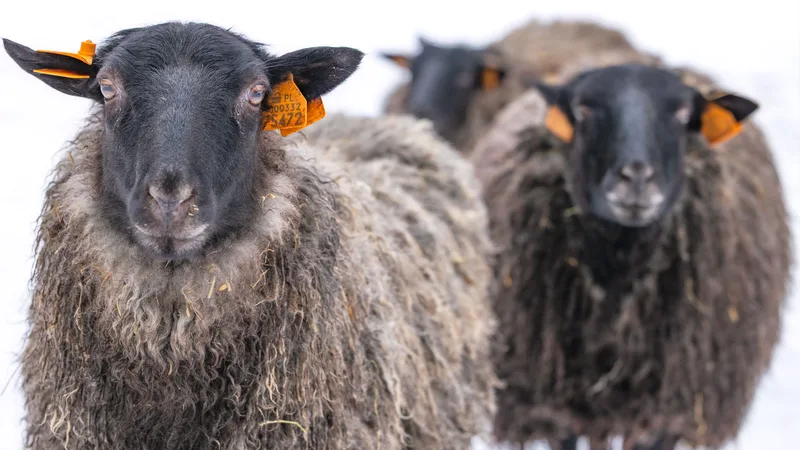
Imagine a scene from an idyllic farm: a group of people struggling with substance addiction walks across a green meadow in the company of sheep. These animals, known for their gentle disposition and herd instinct, shyly approach in search of contact. This is no ordinary walk—it is part of an innovative therapy that combines traditional psychology with the magic of human-animal interaction. In today’s world, where substance use disorders (SUDs) affect millions of people and cause relapses in as many as 40–60% of cases after standard therapy, scientists are looking for new ways to enhance treatment. One of them is animal-assisted intervention (AAI), and more specifically—therapy with sheep. A pilot study conducted by German researchers shows that such contact can significantly improve positive emotions, mindfulness, and self-efficacy in patients with addictions.
Substance use disorders are a global health problem often linked to trauma, stress, and difficulties with emotion regulation. According to the World Health Organization (WHO), SUDs primarily involve alcohol, opioids, or cannabinoids, and men are up to twice as likely to be affected as women. Traditional cognitive behavioral therapy (CBT) helps break addictive habits by teaching people how to cope with triggers, but it often overlooks key elements: normalizing negative emotions and building positive experiences. This is where animals come in. Sheep, as herd animals that are sensitive and calm, are ideally suited to this role. Contact with them requires mindfulness—you have to respect their space, observe their signals, and allow the animal to take the initiative. This teaches patients how to be “here and now,” without judgment, which is the essence of mindfulness.
In the pilot study, published in 2024 in the journal Frontiers in Psychiatry, a team led by Petra Schmid examined the impact of a single AAI session with sheep on a group of 36 patients at a psychiatric hospital in Germany. The participants, mostly middle-aged, were struggling with SUDs, often co-occurring with depression, anxiety, or trauma. The experimental group (AAI) took part in a 5-hour session at the “Prinzenhof” farm, where, under the supervision of certified specialists, they observed interactions with sheep, fed them, led them on a leash, and walked with them off-leash. All of this was carried out as part of a special protocol emphasizing animal welfare—the sheep had a “protective zone” to which they could retreat at any time. The control group received only standard therapy (TAU).
The results were promising. One week after the intervention, patients in the AAI group reported a significant improvement in positive emotions (measured with the STAI-S scale), with a medium-sized effect. Moreover, their levels of mindfulness (FMI) and self-efficacy (SWE) also increased—these effects were statistically significant, unlike in the control group, where changes were minimal. The strongest effects were observed immediately after the session: positive emotions increased with a large effect, while negative emotions decreased. A qualitative analysis of participants’ statements revealed why it works—they spoke of “the joy of closeness,” “peace in nature,” and “reduced rumination.” The sheep helped them experience trust and competence, which is crucial in addiction treatment, where patients often feel helpless.
Why sheep? Unlike dogs or horses, these animals require gentleness and patience, which naturally promotes mindfulness. The study fits into the broader “One Health” approach, linking the health of humans, animals, and the environment. Although it is only a pilot study—without randomization and with a short follow-up period—it suggests that AAI could be an inexpensive (around €200 per group) supplement to CBT. The effects weaken after a week, which points to the need to repeat sessions or integrate them into daily practice, for example through imagery exercises. Who knows—perhaps therapy with sheep will soon become a standard in the fight against addictions?