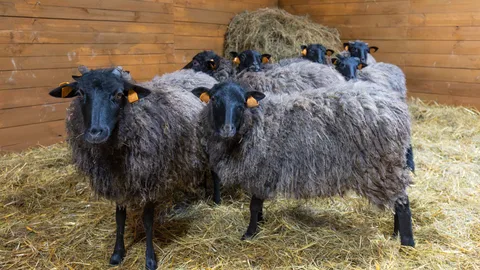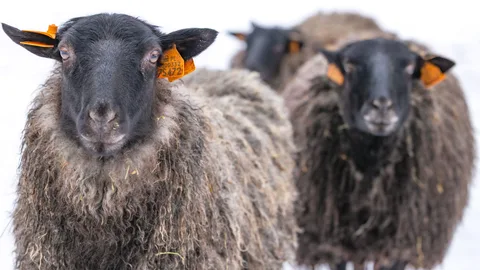
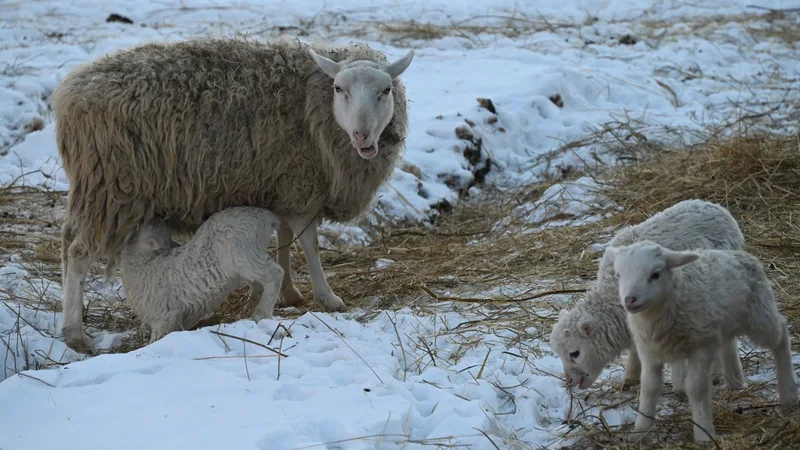
The beauty of sheep is captivating – photo: Grzegorz Grzywaczewski
Imagine that the key to treating diseases of the heart, the brain, or even rare genetic disorders lies not in advanced laboratories, but in pastures, among a flock of sheep. Does that sound like science fiction? And yet sheep, these gentle, herd-dwelling animals, are becoming an increasingly important tool in biomedicine. In a review paper published some time ago, in 2022, in the journal Biology, researchers Ashik Banstola and John N. J. Reynolds from the University of Otago in New Zealand emphasize why sheep are an ideal “large animal model” for studying human diseases. In an era when only 10–20% of new drugs move from preclinical studies to therapies for humans, choosing the right animal model is crucial. Sheep, with their anatomical and physiological closeness to humans, fill a gap that mice or rats cannot bridge.
Why sheep in particular? Traditional so-called small models, i.e. rodents, are inexpensive, easy to breed, and reproduce quickly, but they have serious drawbacks: their brains are lissencephalic (smooth, without folds), and their bodies are too small to test medical devices on a human scale. Sheep, as large mammals, offer something more: a gyrencephalic brain (with folds, as in humans), a longer gestation period (about 5 months), a longer lifespan (up to 12 years), and similarities in organ structures. For example, their heart weighs about 300–400 g, which makes it possible to simulate human conditions in cardiology research. As the data from the review show, the number of studies involving sheep has been growing since the 1950s—with a peak in the 1970s—and today they focus mainly on neurology, cardiology, and the respiratory system. Countries such as Australia, New Zealand, and the USA lead in this area, using sheep to model diseases that occur naturally in them or are experimentally induced.
In neurology, sheep are currently the most prominent. Their relatively large brain (about 140 g) allows for precise imaging using MRI, fMRI, or DTI—tools used in human clinics. For example, a Parkinson’s disease (PD) model induced by toxins such as MPTP or 6-OHDA reproduces symptoms such as tremor and muscle rigidity, and even allows deep brain stimulation (DBS) to be tested on a human scale. Hammock’s studies from the 1980s showed that sheep develop human-like symptoms, which paved the way for testing gene therapy. Similarly, in Huntington’s disease (HD), transgenic sheep with the HTT mutation develop protein aggregates in the brain, which is not achieved in mouse models. Batten disease (CLN5), a rare neurodegenerative disease in children, has a natural model in Hampshire sheep, where gene therapy injected into the brain ventricles delays symptoms—a success that may translate to humans. Even epilepsy: Merino sheep are used to study focal seizures, using EEG and fMRI.
Not just the brain—sheep are revolutionizing cardiology. Their cardiovascular system is similar to that of humans, which allows valve prostheses or stents to be tested. In one study, sheep were used to implant a modified pulmonary valve in a beating heart, using echocardiography. In orthopedics, they model osteoporosis (induced by removal of the pituitary gland) or bone healing, where titanium implants are tested. Their bones are biomechanically similar to human bones, which makes them better than pigs, which grow too quickly. In reproduction, sheep simulate polycystic ovary syndrome (PCOS)—prenatal exposure to testosterone causes hormonal deficits similar to those in women. The maternal-fetal model makes it possible to study the pharmacokinetics of drugs during pregnancy, such as propofol.
Oncology and the respiratory system also benefit: natural lung cancer (OPA) in sheep, caused by the JSRV retrovirus, mimics human adenocarcinoma. Studies using endoscopy show tumor progression. In urology, sheep model renal ischemia, testing the protective effect of zinc. Even in transplantology, sheep are used to study uterine or kidney transplants, thanks to similar vascular anatomy.
But sheep are not only about research—their role in animal-assisted therapy (AAT), as in previous studies on addictions or mental disorders, demonstrates a holistic approach. Contact with sheep increases oxytocin, reduces anxiety, and activates the prefrontal cortex, which may complement pharmacological treatment.
Of course, sheep have limitations: they are more expensive to maintain than rodents and more difficult to genetically manipulate (although CRISPR is changing this). Ethics is crucial—research must minimize suffering. However, as the authors emphasize, sheep fill the gap between small models and primates, whose use raises far greater controversy.
Of course, sheep have limitations: they are more expensive to maintain than rodents and more difficult to genetically manipulate (although CRISPR is changing this). Ethics is crucial—research must minimize suffering. However, as the authors emphasize, sheep fill the gap between small models and primates, whose use raises far greater controversy.
Banstola, A., & Reynolds, J. N. J. (2022). The sheep as a large animal model for the investigation and treatment of human disorders. Biology, 11(9), 1251. https://doi.org/10.3390/biology11091251